 Stampario
HVAC maintenance reports your customers actually read
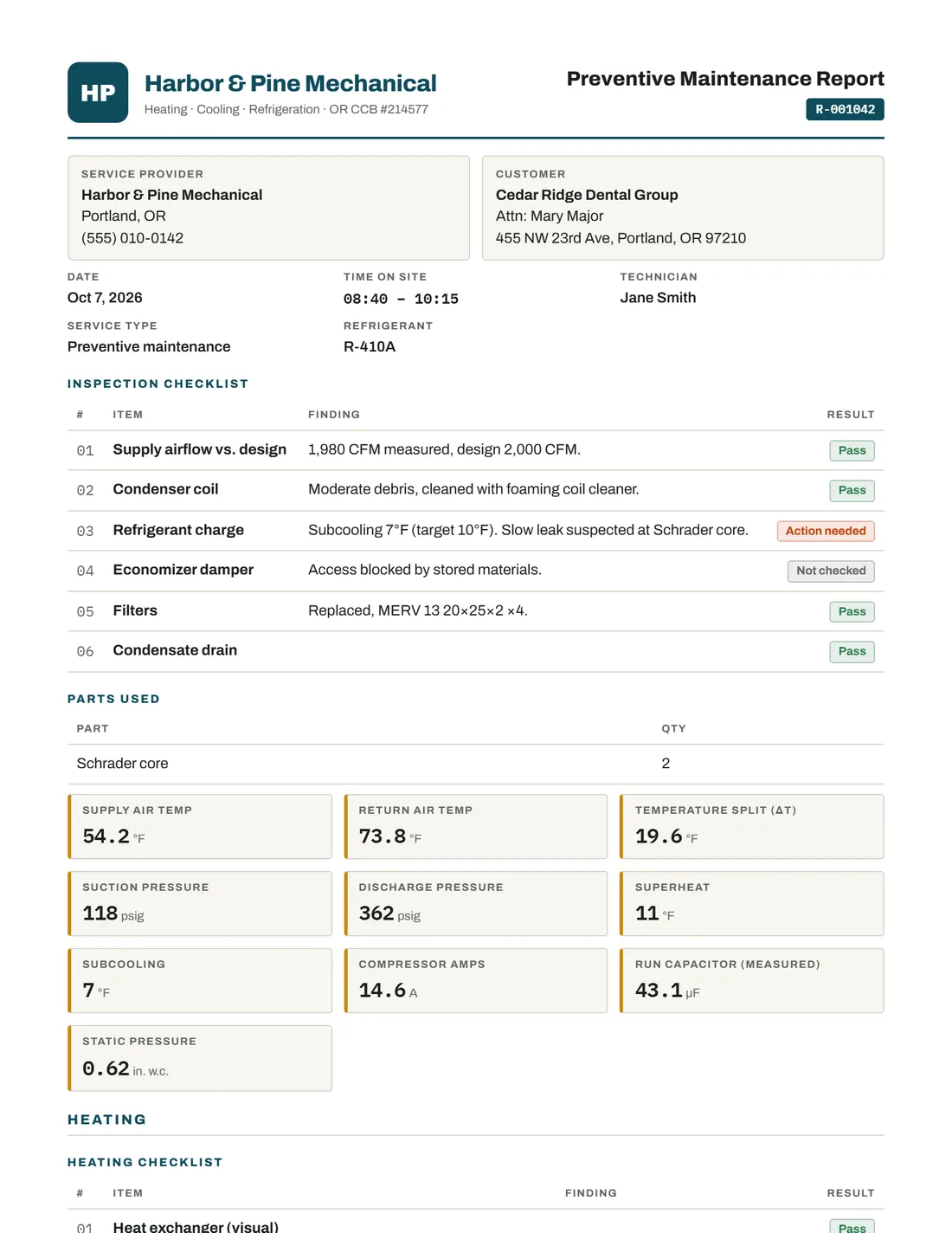
Checklist, pressures, temperatures and before-and-after photos, filled on the roof and sent as a clean PDF with your logo. Next spring, the unit’s last readings are already there.
Three things you stop doing
Readings scribbled on the back of an invoice
Supply and return temps, suction and discharge pressures, amps and static pressure each get a labeled field with units, so the report reads the same no matter which tech wrote it.
Maintenance agreements that renew themselves only on paper
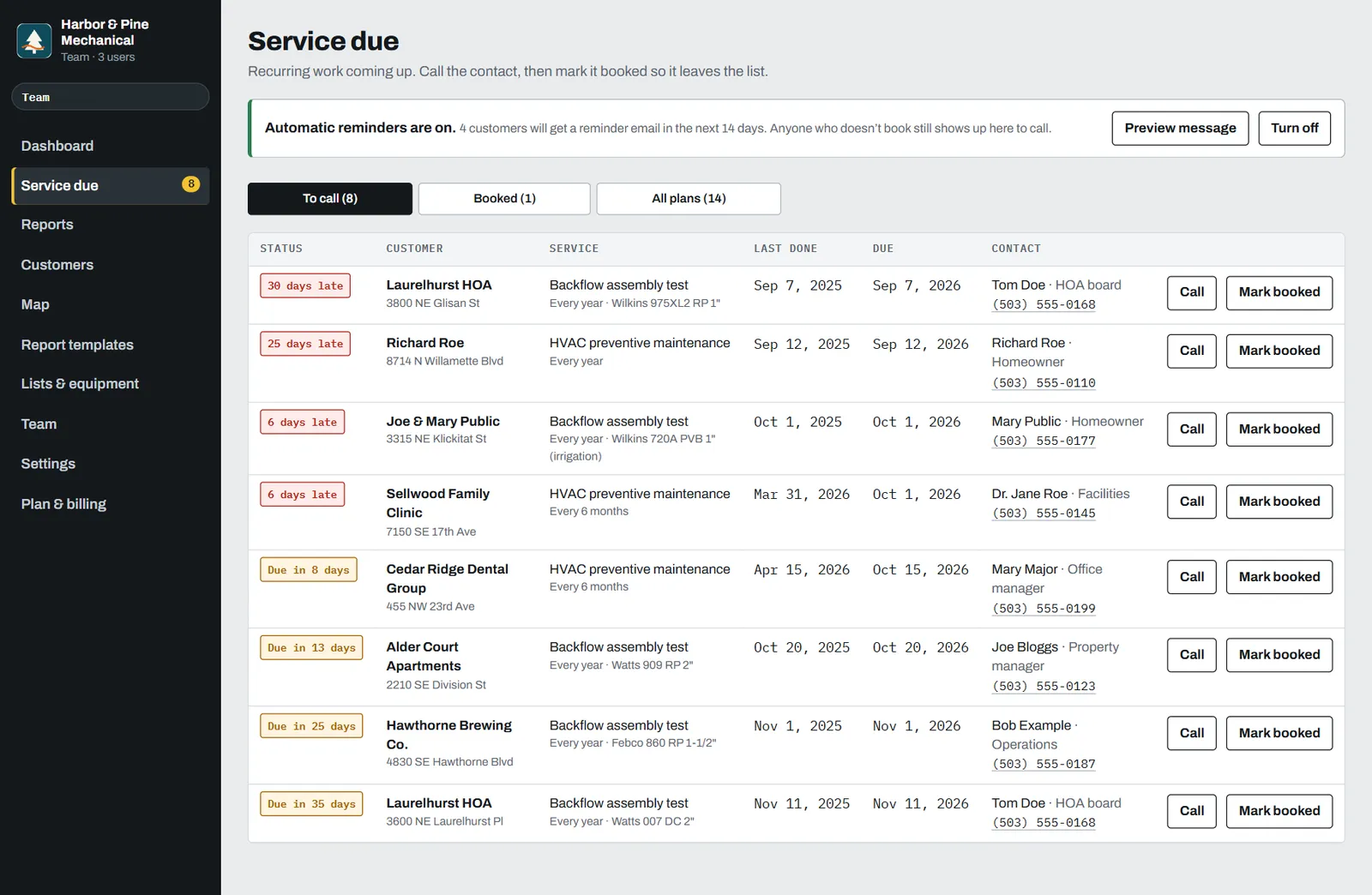
Set agreements to two visits a year. The call list shows who is due for the spring or fall visit, with the contact’s number.
“What did you do last time?”
Open the address and see every unit, its refrigerant and filter size, and what was found on each visit, including findings you have not quoted yet.
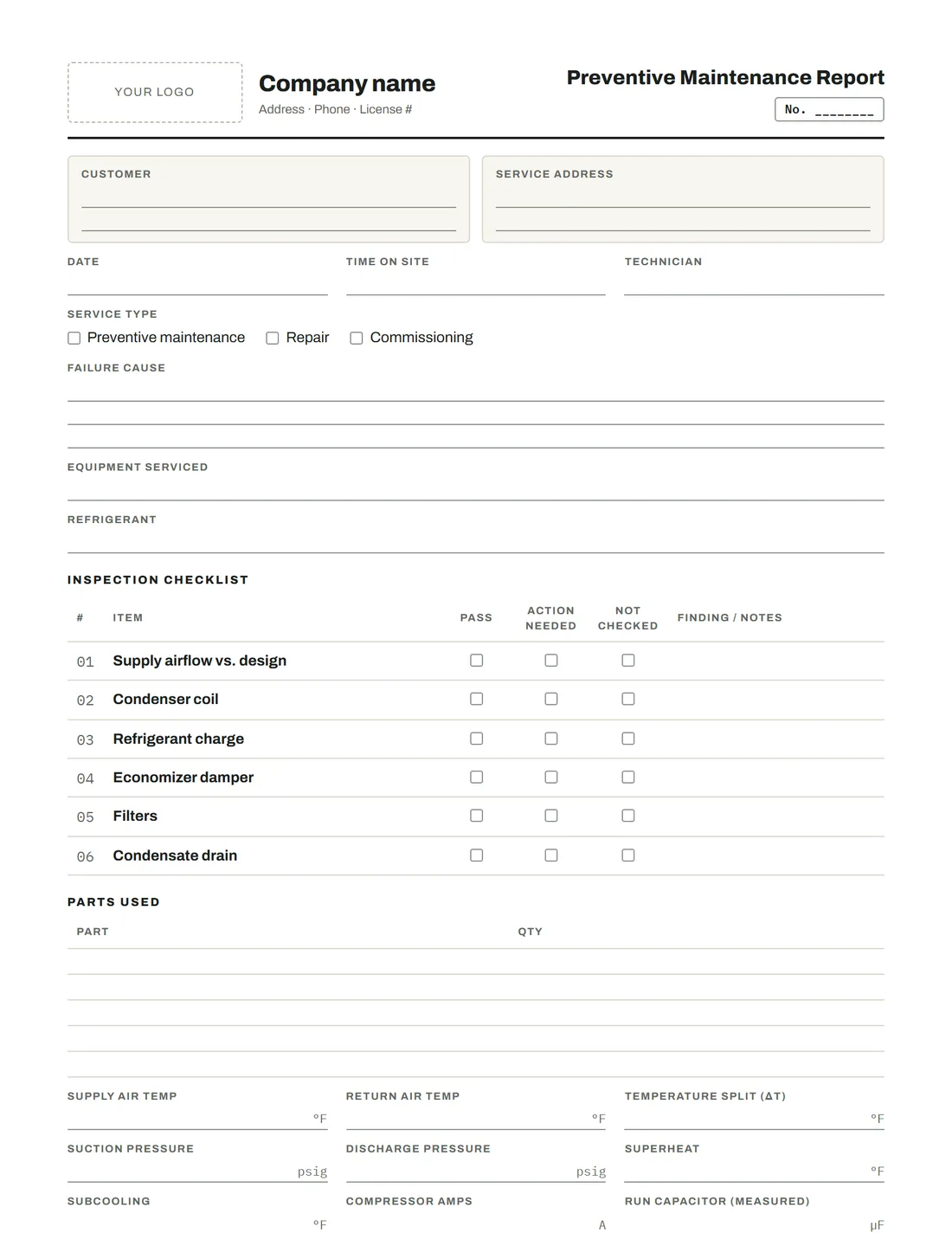
Preventive Maintenance Report
The template your account starts with. Switch off any line you don’t use and add your own.
- 01Service type
- 02Failure cause
- 03Equipment serviced
- 04Refrigerant
- 05Inspection checklist
- 06Parts used
- 07Supply air temp
- 08Return air temp
- 09Temperature split (ΔT)
- 10Suction pressure
- 11Discharge pressure
- 12Superheat
- 13Subcooling
- 14Compressor amps
- 15Run capacitor (measured)
- 16Static pressure
- 17Heating checklist
- 18Temperature rise
- 19Manifold gas pressure
- 20Flame sensor
- 21CO in flue
- 22Notes & recommendations
- 23Recommended but declined by customer
Refrigerants
Filter sizes
HVAC parts
Anything a technician types that is not on the list is added for next time.
Two maintenance visits a year by default (spring cooling, fall heating), quarterly for commercial filter changes. Reminder 21 days before.
Default: every 6 months · remind 21 days before · change per customer
The call list builds itself
Every customer on a cycle shows up before they are due, with the contact’s name and number. Call, book, mark it booked, and it leaves the list.
What to know for hvac
Requirements vary by state, city and the code edition your authority having jurisdiction uses. This is a starting point, not legal advice.
- Residential maintenance reports are mostly warranty and customer records, not a legal filing.
- For commercial systems with 15 lb or more of HFC refrigerant, EPA rules require refrigerant service records; the report keeps refrigerant type and findings per unit to support that record.
HVAC contractors ask
Does it work alongside Jobber or Housecall Pro?
Yes. Keep scheduling and invoicing where they are. Use this for the report your customer gets and for the unit history at each address.
Can I add my own checklist items?
Yes. Switch off items your crew doesn’t do and add your own, for example economizer checks only for commercial RTUs.
Does it work on the roof with no signal?
The phone app keeps the draft as you type. Sending needs a connection; offline sync is on the roadmap for the native app.
What does it cost?
Free for 5 reports a month. Pro is $29 a month for unlimited reports and automatic reminder emails; Team is $69 a month for 3 field technicians. Every account gets 14 days of Pro starting with the first report, no card needed.
Send your next hvac report from the job
Free for 5 reports a month. No card. Your logo on every PDF from the first one.