 Stampario
Hood cleaning certificate and report under NFPA 96
After cleaning a commercial kitchen exhaust system, NFPA 96 expects two things: a certificate kept on the premises showing the company, the person who did the work and the date, and a written report to the owner that says which areas were cleaned and which were not. Many fire departments also expect a sticker at the hood with the next due date.
The certificate
Names the servicing company, the person who performed the work and the date. It stays on the premises, usually posted near the hood.
The written report
Lists the areas inspected and cleaned and, just as important, the areas that were not cleaned and why: no access panel, locked roof, equipment in the way. Leaving out uncleaned areas is what gets contractors in trouble after a fire.
What local forms add
- Boston Fire Department’s sample report: 22 numbered questions (grease depth in hood, ducts and fan, diagram posted, certificate placed, access panels) and a deficiency page sent to the BFD within 5 business days
- New Jersey municipal forms: a checklist of grease trays, filters, plenum, suppression nozzles, ductwork and fan, plus owner and contractor signatures and the next inspection date
- Coloured stickers by frequency in some cities (Boston: white monthly, yellow quarterly, blue semi-annual, green annual, with a deficiencies yes/no box)
How Stampario fills it
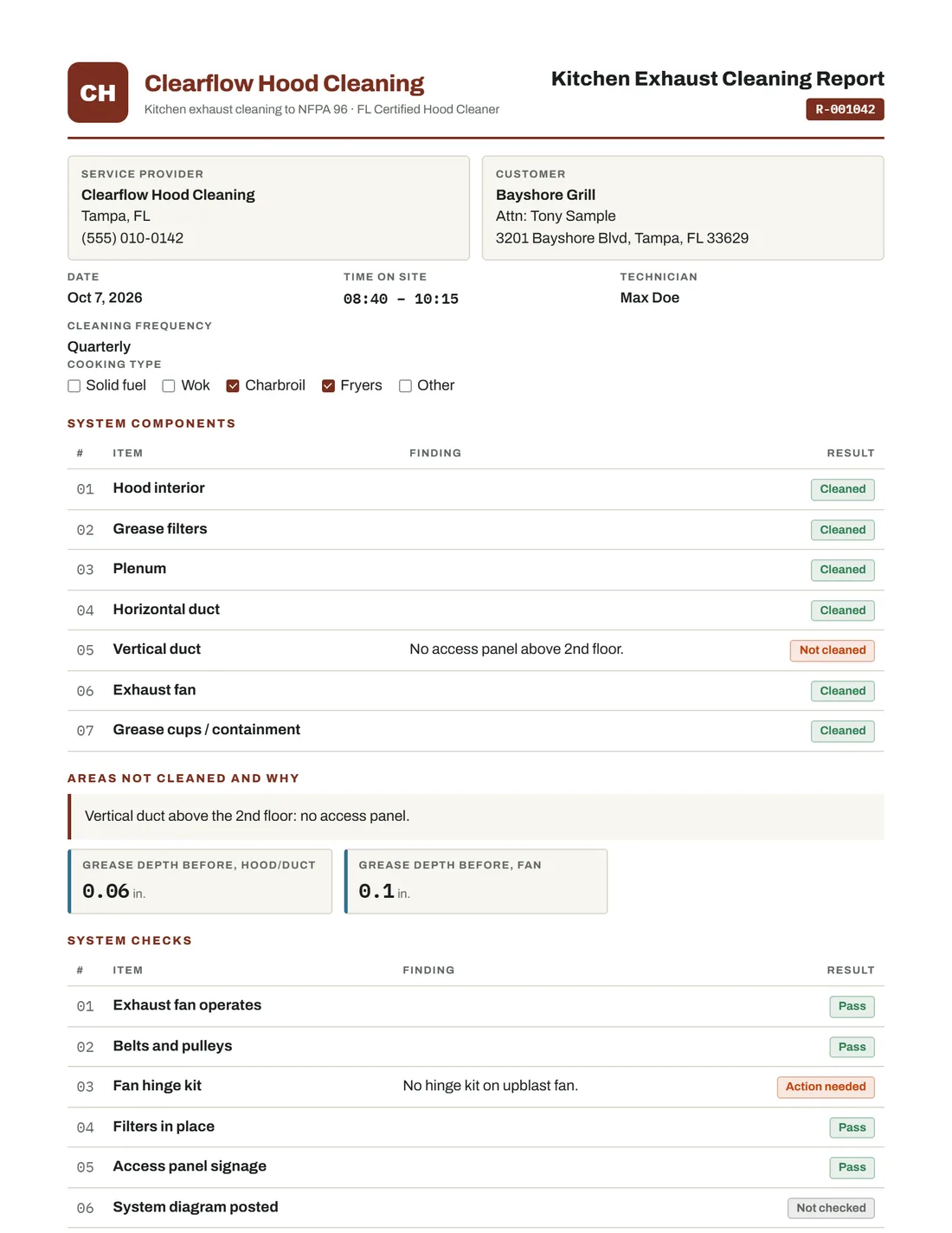
- The hood cleaning report marks each component cleaned or not cleaned, and "areas not cleaned and why" is a required field.
- Grease depth, fan checks, next due date and your certification number go on the same PDF, with before/after photos.
- It ends with a certificate-of-performance statement and both signatures.
Common questions
Which edition of NFPA 96 applies?
The one your local fire code adopted. Section numbers move between editions, but the certificate and the report of uncleaned areas appear in recent editions.
Does Canada use the same rules?
The National Fire Code of Canada refers to NFPA 96 for commercial cooking exhaust, so the same certificate and report apply.
Sources
- Boston Fire Department: sample hood cleaning inspection and deficiency report
- Boston Fire Department: commercial cooking hood and ventilation system sticker instructions
- Montgomery Township, NJ: kitchen ventilation system cleaning form
Codes change by edition and the authority having jurisdiction (your fire marshal, water purveyor or state agency) decides which rules apply. This page is general information, not legal advice.