 Stampario
Texas fire extinguisher service tag requirements
In Texas, every extinguisher serviced must carry a new service tag (28 TAC §34.520), 5¼ × 2⅝ inches and not red. It shows "DO NOT REMOVE BY ORDER OF THE STATE FIRE MARSHAL", the firm’s name, address, phone and certificate-of-registration number, the licensee’s name, licence number and signature (no stamps), the punched month, year and type of work, the service performed, the owner or occupant’s name and address, and the extinguisher’s type, size and location.
What the tag must show
- "DO NOT REMOVE BY ORDER OF THE STATE FIRE MARSHAL" in bold type of at least 10 points
- Firm name, address and phone, and the firm’s certificate-of-registration number
- Licensee’s name, licence number and signature (stamped signatures are not allowed)
- Month and year, and the type of work, punched
- The service performed
- Owner or occupant name and address
- Extinguisher type, size and location
Size and colour
The tag is 5¼ × 2⅝ inches and not red. Adhesive label tags are allowed if they carry all the required information.
The tag stays physical
The tag is attached to each extinguisher and the dates are punched. A report doesn’t replace it; it gives the owner the full list of units in one document.
How Stampario fills it
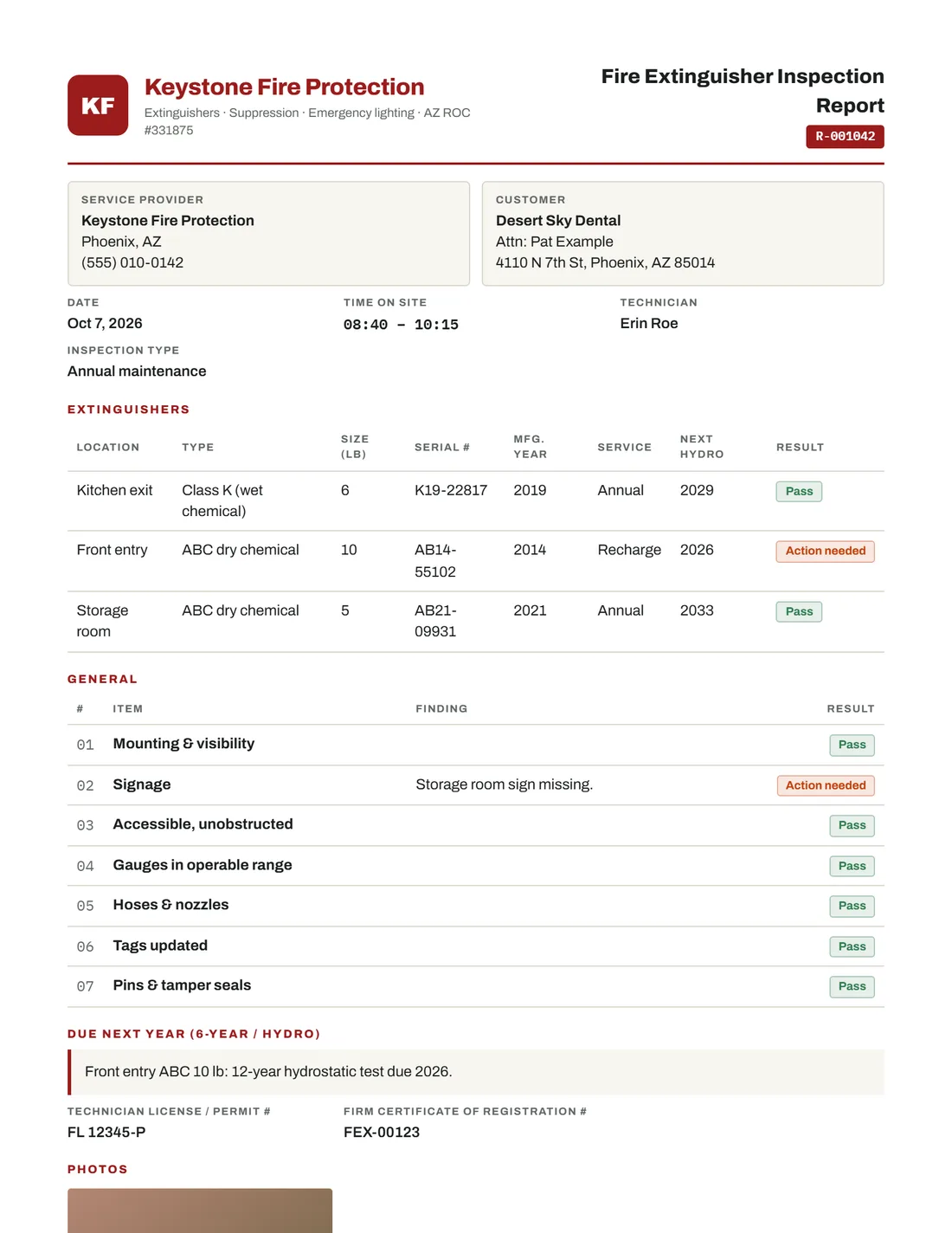
- The fire extinguisher report has one row per unit with location, type, size, serial, service and next hydro date, which is the data each tag needs.
- Your firm registration number and licence number print on the report.
- The customer gets the full inventory in one signed PDF, and next year’s inspection lands on your call list.
Common questions
Can Stampario print the tags?
Not yet. Texas tags need punched month, year and type of work and the licensee’s signature. The report gives you every value to write or print on your tag stock.
Do other states have tag rules?
Yes. Florida (69A-21.241) and California (Title 19) set their own tag contents. The report includes the technician permit and firm registration fields those states ask for.
Sources
Codes change by edition and the authority having jurisdiction (your fire marshal, water purveyor or state agency) decides which rules apply. This page is general information, not legal advice.